
Table of Contents
- Why a Pediatric Dentist for an Autistic Child Needs a Different Approach
- Preparing an Autistic Child for the Dentist: A Step-by-Step Plan
- Dental Desensitization Techniques for Autism You Can Start at Home
- Tips for Children with Dental Anxiety: What Works in the Chair
- Sedation Dentistry and Behavioral Management Options for Autism
- Insurance and Financial Advocacy for Special Needs Dental Care
- Conclusion
- Frequently Asked Questions
Last Updated: September 21, 2026
Why a Pediatric Dentist for an Autistic Child Needs a Different Approach
Finding the right pediatric dentist for autistic child starts with one fact: a standard dental visit is built for neurotypical kids. The lights, the sounds, the reclining chair, and the hands in the mouth can overwhelm a child with autism. That is why a different approach matters.
The goal is not to force a visit through. The goal is to build trust over several short, calm visits so the child learns the chair is safe.
Preparing an Autistic Child for the Dentist: A Step-by-Step Plan
Preparing an autistic child for the dentist works best as a slow, planned process. Start at least one to two weeks before the appointment. Rushing the prep usually backfires.
Here is a simple plan:
- Call the office first. Ask about their experience with autism and sensory needs.
- Visit the office before the appointment. Many practices offer a meet-and-greet with no treatment.
- Practice at home. Let the child sit in a reclined chair and open wide for a count of ten.
- Read a social story. A short book about the visit helps the child know what to expect.
- Pack comfort items. A favorite toy, headphones, or a weighted lap pad can help.
- Schedule the right time. Pick a slot when the child is calm and not hungry or tired.
| Step | When to Do It | Why It Helps |
|---|---|---|
| Call the office | 2 weeks before | Confirms sensory-friendly care |
| Office tour | 1 week before | Removes fear of the unknown |
| Home practice | Daily | Builds comfort with the chair |
| Social story | Night before | Sets clear expectations |
| Comfort items | Day of visit | Lowers anxiety in the chair |
Using Visual Schedules and Social Stories Before the Visit
A visual schedule shows each step of the visit as a picture. The child sees what comes next, which lowers fear. A social story is a short, simple book that describes the visit in plain words.
Dental Desensitization Techniques for Autism You Can Start at Home
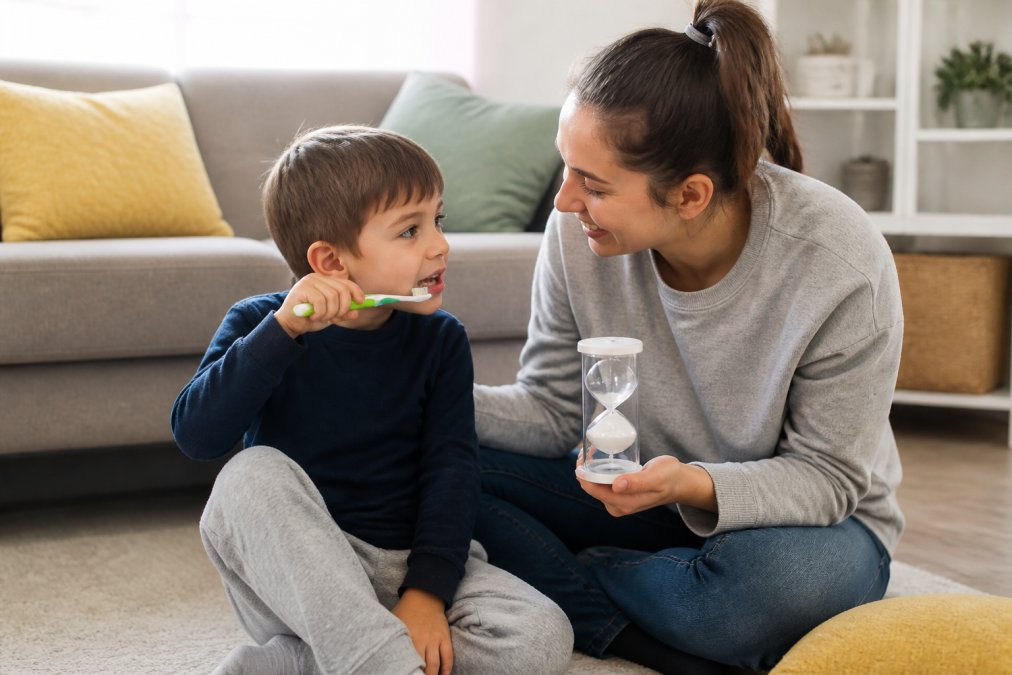
Dental desensitization is the practice of slowly introducing dental tools and sensations so they feel less scary. Most practices only run desensitization inside the office. The bigger opportunity is at home, where a parent can run short, low-stakes sessions weeks before the first real visit. Small, repeated steps work better than one big push, and the child controls the pace.
A Four-Week Home Protocol You Can Start Tonight
This is the kind of sequence many pediatric dentists recommend. Adjust the pace to your child, never move to the next week until the current one is calm and predictable.
Week 1, Mouth and face only, no tools.
- Count teeth out loud together in front of a mirror.
- Touch the lips and gums gently with a clean finger.
- Practice “open wide” for a count of three, then five, then ten.
- Use a visual timer so each step has a clear end.
Week 2, Introduce the toothbrush as an object, not a task.
- Let the child hold and explore a soft toothbrush before brushing.
- Brush a doll’s teeth, then a stuffed animal’s, then the child’s.
- Let the child brush your teeth while you narrate what you feel.
- Keep each session under two minutes.
Week 3, Add dental-adjacent sensations.
- Play with a small flashlight to practice “open wide” while a light shines in.
- Try a vibrating toothbrush for a few seconds at a time to get used to the buzz.
- Play recordings of dental sounds (drill, suction) at low volume and slowly raise it across the week.
- Practice reclining in a beanbag or recliner with a pillow behind the head.
Week 4, Rehearse the visit itself.
- Walk through the steps of a check-up in order: sit, recline, open, count, rinse, sit up.
- Use a visual schedule (see below) so the child sees what comes next.
- Practice a hand-raise stop signal and honor it every single time.
- Do one full dry run the night before the appointment.
Home-Based Exercises for Tactile and Auditory Sensitivity
Tactile sensitivity means touch feels stronger or more upsetting than usual. Auditory sensitivity means certain sounds feel too loud. Both can make a dental visit hard, and both respond to graded exposure at home.
A common mistake is pushing too fast. If a child cries, the session is over. Short, happy sessions beat long, stressful ones every time. Two calm minutes a day for four weeks will do more than one long session the night before.
Build Your Own Visual Schedule and Social Story
A visual schedule shows each step of the visit as a picture. A social story is a short, simple book that describes the visit in plain words. Both work because they make the visit predictable, and both are easy to build at home.
Desensitization is not a one-time event. It is a routine. The families who see the calmest visits are the ones who started four weeks out, kept sessions short, and let the child lead.
Tips for Children with Dental Anxiety: What Works in the Chair
Tips for children with dental anxiety focus on control and comfort. Give the child choices, use a calm voice, and never rush. A therapeutic approach that respects the child’s limits works better than pressure.
What helps in the chair:
- A “tell-show-do” method: explain, show the tool, then use it.
- A stop signal the child can give with a hand raise.
- Positive reinforcement after each small success.
- Headphones, sunglasses, or a weighted blanket.
- A parent nearby when it calms the child.
Sedation Dentistry and Behavioral Management Options for Autism
Sedation dentistry can help when a child cannot stay calm for needed care. Options range from mild to deep, and the right one depends on the child and the treatment.
Common options include:
- Nitrous oxide, a mild gas that relaxes the child while they stay awake.
- Oral sedation, a pill or liquid given before the visit.
- General anesthesia, used for complex care or children who cannot cooperate.
Sedation is not risk-free. It needs a trained team and a full health review. Never agree to sedation without asking who monitors the child and what safety steps are in place.
Insurance and Financial Advocacy for Special Needs Dental Care
Insurance and cost are real worries for many families. Coverage for special needs dental care varies by plan and state, and the paperwork is where most parents get stuck. The Medicaid dental coverage information explains that children’s dental benefits differ by state program. What follows is the practical side: the codes, the programs, and the appeal steps that actually move a claim.
Know the Codes Before You Call
Dental offices bill using CDT codes (Current Dental Terminology). Two matter most for this conversation:
- D0120, periodic oral evaluation. A standard check-up.
- D0140, limited oral evaluation, problem focused.
- D9920, behavior management, which some plans reimburse when a child needs extra time and a structured approach.
- D9248, non-intravenous conscious sedation.
- D9222 / D9223, deep sedation / general anesthesia, first and each additional 15 minutes.
Programs That Often Cover More Than Parents Expect
- Medicaid and CHIP. Children’s dental is a required benefit under Medicaid, and EPSDT (Early and Periodic Screening, Diagnostic, and Treatment) requires states to cover medically necessary treatment for children under 21, including some services that would be excluded for adults (Early and Periodic Screening, Diagnostic, and Treatment). Ask your state Medicaid agency what your child qualifies for.
- State Medicaid waivers. Many states run Home and Community-Based Services (HCBS) waivers that can fund dental care, transportation, or a support aide for children with autism. Waitlists are common, so apply early.
- CSHCN / Title V programs. State Children with Special Health Care Needs programs sometimes coordinate dental referrals and cover gaps.
- Dental schools and community health centers. Many offer sliding-scale fees and are experienced with sensory needs.
- Practice membership plans. Pediatric Dental Excellence offers a Dental Club membership for families without insurance, which provides discounted services. Ask the front desk for details.
How to Appeal a Denial, Step by Step
- Request the denial in writing with the specific reason and the plan’s appeal deadline. Note the date.
- Ask the dentist for a letter of medical necessity describing your child’s diagnosis, sensory needs, and why the requested code is required.
- File the internal appeal before the deadline. Send it certified mail or through the plan’s portal so you have a timestamp.
- If the internal appeal fails, request an external review. Most plans must offer one, and many states have a consumer assistance office that will help you file.
- Contact your state insurance department if the plan misses deadlines or refuses a valid external review.
- Keep every document, claim numbers, denial letters, appeal receipts, and the treatment plan, in one folder.
Never agree to a treatment plan or sedation without a written estimate that lists the CDT codes and the patient responsibility. Verbal estimates are not enforceable, and surprise balances are the most common complaint in special needs dental care.
Advocacy is a paper trail. Get the codes in writing, get the denial in writing, and appeal in writing. The families who do this recover far more of their costs than the families who accept the first “no.”
Conclusion
A dental visit for an autistic child can go well with the right plan. Start early, practice at home, and choose a team that understands sensory needs.
Frequently Asked Questions
How do autistic children go to the dentist?
Many autistic children see a pediatric dentist who uses a tailored approach. This can include a quiet appointment time, a visual schedule, gradual introduction to dental equipment, and clear, literal communication. Some children need several short visits before a full cleaning. Others may need behavioral management techniques or sedation dentistry. A board-certified pediatric specialist can design a customized care plan based on your child’s sensory profile and cooperation level.
What should I do if my autistic child won’t go to the dentist?
Start with home-based desensitization exercises. Let your child touch a soft toothbrush, then a dental mirror, without any pressure to open their mouth. Use social stories and visual aids to explain what happens at a check-up. Call the office ahead of time to ask about sensory accommodations, such as noise-canceling headphones or a weighted lap pad. If anxiety remains high, ask about a desensitization appointment or sedation options.
Are there specific accommodations for autistic patients in dental offices?
Yes. Many pediatric dental offices offer accommodations like dimmed lighting, reduced noise, a quiet waiting area, and scheduled visits during low-traffic times. Some provide visual aids, social stories, and a tell-show-do approach. For children with severe dental anxiety or tactile sensitivity, sedation dentistry including nitrous oxide or general anesthesia may be available. Ask the office what sensory-friendly options they provide before you schedule.
How can I prepare my child with autism for a dental exam?
Begin preparing at least a week in advance. Use a visual schedule that shows each step: arriving, sitting in the chair, opening wide, and getting a prize. Practice opening the mouth at home for a few seconds at a time. Read social stories about the dentist. On the day of the visit, bring a comfort item and keep your own tone calm. Tell the dental team about your child’s triggers so they can adjust their approach.
A calmer dental visit starts with the right partner. Pediatric Dental Excellence offers board-certified pediatric care, a sensory-aware team, and the Dental Club membership for families without insurance. Get started with Pediatric Dental Excellence and give your child care that meets them where they are.