
Table of Contents
- Why Toddlers Resist Toothbrushing and What You Can Do About It
- How to Brush Toddler Teeth Step by Step
- How Long to Brush Toddler Teeth
- How to Make Brushing Teeth Fun for Toddlers
- When Your Toddler Refuses to Brush Teeth
- Building a Consistent Brushing Routine
- When to Contact a Pediatric Dentist
- Frequently Asked Questions
Last Updated: October 9, 2026
Why Toddlers Resist Toothbrushing and What You Can Do About It
Toddlers often resist brushing because the experience feels unfamiliar, uncomfortable, or overwhelming, making it harder to clean toddler teeth effectively.
Common reasons include sensory sensitivities (taste, texture, or sensation of the toothbrush), fear of choking or gagging, loss of control, and lack of routine.
Resistance is normal and manageable. Most toddlers respond well to patience, consistency, and making brushing feel like playtime.
Start early with brushing exposure. Let your toddler watch you brush your own teeth, touch the toothbrush, and get comfortable with it in their mouth before you actually try to clean their teeth. Familiarity reduces fear.
Don’t force the issue, pressure and frustration backfire, turning brushing into a battle. Focus on building positive associations with the toothbrush and routine.
How to Brush Toddler Teeth Step by Step
Brushing a toddler’s teeth requires a gentle approach and the right technique. When you clean toddler teeth properly, you remove food debris and plaque while keeping your child calm.
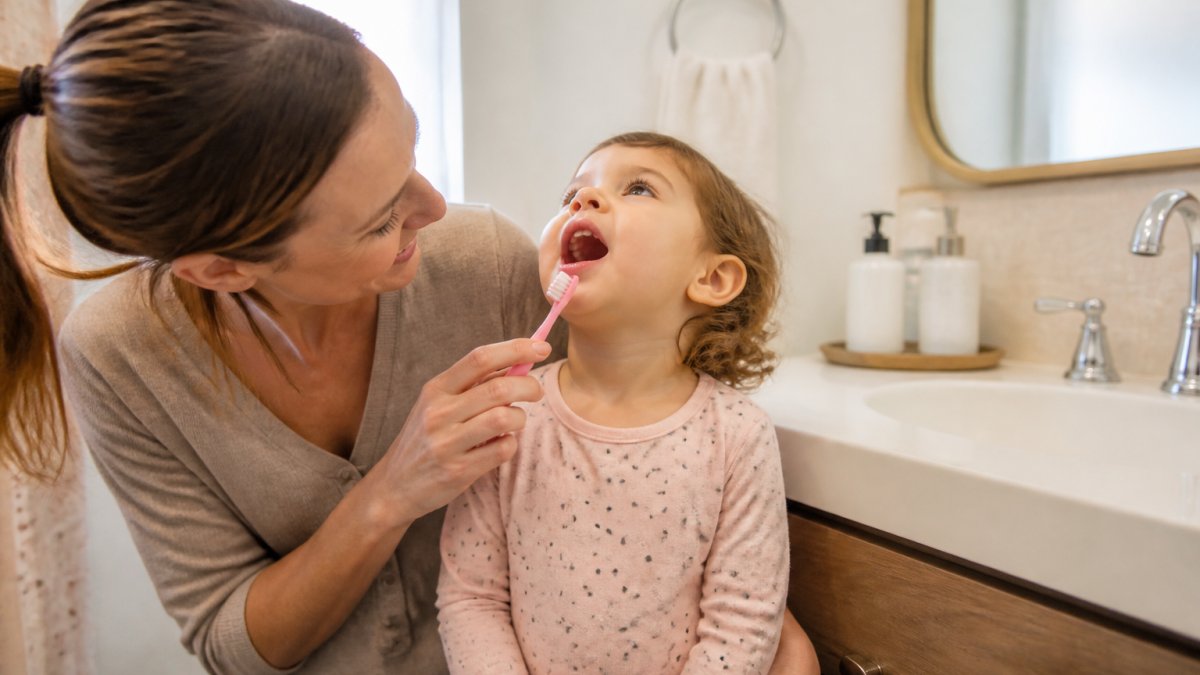
Positioning and Safety
Position your toddler safely first. For children under three, sit on the floor or a low chair with your toddler between your legs or on your lap for control and stability.
For ages 3-5, stand behind them at the sink so they can see you in the mirror, and tilt their head back slightly.
Keep the bathroom well-lit, and use a small step stool so older toddlers reach the sink comfortably, reducing anxiety about height and distance.
The Brushing Technique
Use a soft-bristled, child-sized toothbrush that fits comfortably without triggering a gag reflex.
Here’s the step-by-step technique:
-
Start with the outer surfaces. Gently brush the outer (cheek-facing) surfaces of the upper teeth first, using small circular motions. Move from back to front.
-
Move to the inner surfaces. Brush the inner (tongue-facing) surfaces of the upper teeth using the same gentle circular motions.
-
Brush the chewing surfaces. Use short back-and-forth strokes across the flat chewing surfaces of the upper teeth.
-
Repeat on the lower teeth. Follow the same pattern for the lower teeth: outer surfaces, inner surfaces, then chewing surfaces.
-
Gently brush the gumline. Angle the brush at a 45-degree angle to the teeth and gently brush where the teeth meet the gums. This is where plaque builds up.
-
Let them spit. Encourage your toddler to spit out the toothpaste and water. They don’t need to rinse with a full cup of water, spitting is enough.
Keep the process gentle, light pressure with small movements. Aggressive brushing makes toddlers defensive and increases resistance.
Age-Appropriate Toothpaste Amount and Fluoride
The amount of toothpaste matters. For toddlers under age 3, use a smear of toothpaste about the size of a grain of rice.
Fluoride prevents cavities, but too much in young children can cause fluorosis (white spots on teeth).
If your toddler swallows toothpaste, ask a pediatric dentist whether fluoride toothpaste is right for them. Many recommend it for all children starting at age 1, but individual needs vary.
Never give your toddler the toothbrush to use alone until they’re old enough to spit reliably (usually around age 5-6). Unsupervised brushing increases the risk of swallowing toothpaste.
How Long to Brush Toddler Teeth
Most dental professionals recommend about two minutes, though for toddlers even one to two minutes of thorough brushing is effective.
Many toddlers won’t sit still for two minutes, especially if resistant.
Focus on quality over duration: a calm 60-second brushing that reaches all surfaces is more effective than a chaotic two-minute session.
As your toddler gets comfortable, work toward the two-minute goal.
How to Make Brushing Teeth Fun for Toddlers
The secret to reducing resistance is making brushing feel like play, not a task. When toddlers enjoy it, they cooperate more easily.
Games, Songs, and Timers
Songs are powerful tools.
Create a brushing song with your toddler’s name in it: “Brush, brush, brush your teeth, [Child’s name] keeps them clean…” Singing together turns brushing into bonding rather than something done to them.
Timers work well too. A visual timer helps toddlers understand the duration and gives a concrete endpoint, which reduces anxiety.
Simple games help: ask your toddler to “find the sugar bugs,” or pretend the toothbrush is a “tiny train” visiting each tooth.
Letting Your Child Choose and Take Turns
Toddlers resist less when they have some control. Let them choose between two toothbrushes or toothpaste flavors, this makes them a partner, not a victim.
Taking turns also reduces resistance. Let your toddler brush your teeth first (even if they just chew the brush), then you brush theirs, this models behavior and builds fairness.
After you finish, let them have another turn. They may not clean effectively, but the practice builds familiarity and reduces fear.
Schedule An Appointment Today →
Brushing Together and Pretend Play
Brush your own teeth at the same time. This shows brushing is something everyone does, not a punishment, kids learn by imitation.
Pretend play is powerful. Brush their favorite stuffed animal’s teeth first, let them watch and help, then say, “Now it’s your turn!” It feels less threatening after seeing it done to a toy.
The most effective strategy combines routine (same time every day), choice (let them pick the toothbrush), and play (songs, games, pretend). Consistency matters more than perfection.
When Your Toddler Refuses to Brush Teeth
Even with the best strategies, some toddlers refuse. Handling refusal calmly makes a real difference.
Handling Sensory Sensitivities
Some toddlers resist because of genuine sensory sensitivities, toothpaste taste, electric brush vibration, bristle texture, or water in the mouth can feel overwhelming.
If your toddler has sensory sensitivities, try these adjustments:
- Use a toothpaste with a flavor they like (bubblegum, strawberry, or mild mint)
- Try a softer toothbrush or a smaller brush head
- Let them control the water (have them hold the cup and decide when to rinse)
- Start with just brushing the front teeth, then gradually add more
Desensitization helps too: let them hold the toothbrush and touch it to their lips without brushing, taste toothpaste on their finger, and build comfort slowly over days or weeks.
If your toddler has diagnosed sensory processing differences (like autism), a pediatric dentist experienced with sensory needs can help. Dr.
Staying Calm When Your Child Becomes Distressed
When your toddler cries, gags, or becomes upset, your calm response matters enormously. Frustration or force increases their distress and hardens resistance.
Here’s what to do:
- Pause and breathe. Take a breath yourself. Your calm presence reassures your toddler.
- Acknowledge their feelings. Say, “I see you’re upset. Brushing feels uncomfortable right now.”
- Don’t force it. Forcing a toddler to brush when they’re distressed creates negative associations that last.
- Offer a choice. “Do you want to brush now or in five minutes?” or “Should we use the blue brush or the red brush?”
Toddlers who feel heard and respected cooperate more next time. Forcing compliance teaches them their body isn’t their own, increasing anxiety.
A Realistic Plan for Missed or Incomplete Brushing
Perfect brushing twice daily is the goal, but life with toddlers isn’t perfect. Some days they’ll refuse or only tolerate a 30-second brush.
That’s okay, incomplete brushing beats no brushing, and a missed session isn’t a disaster.
Here’s a realistic approach:
- Aim for consistency, not perfection. Brushing most days is far more important than brushing perfectly every single day.
- Focus on bedtime brushing. If you can only manage one good brushing, make it bedtime. Overnight, saliva production drops, so removing food debris before sleep is especially important.
- Don’t stress over occasional missed days. One missed brushing won’t cause cavities. Patterns matter more than isolated incidents.
- Keep trying. Resistance often improves with time and consistency. What doesn’t work this month might work next month as your toddler matures.
If your toddler consistently refuses and you’re concerned about their oral health, talk to a pediatric dentist, sometimes an underlying issue like infection or extreme anxiety needs professional attention.
Building a Consistent Brushing Routine
Routines reduce resistance by eliminating the “Do we have to?” negotiation.
Link brushing to existing routines: after breakfast and before bed.
Use the same location, time, and sequence daily. Predictability comforts toddlers and reduces anxiety.
Keep the toothbrush and toothpaste in the same spot so your toddler becomes familiar with them.
Celebrate small wins, opening their mouth is progress, tolerating 30 seconds is an accomplishment.
When to Contact a Pediatric Dentist
Most toddler brushing resistance is normal and manageable at home. But certain situations warrant professional input.
Contact a pediatric dentist if:
- Your toddler has extreme anxiety or panic around brushing (not just resistance, but genuine distress)
- You suspect an oral problem like an infection, loose tooth, or injury that’s causing pain
- Your toddler has sensory processing differences and you need specialized strategies
- Your toddler is consistently refusing all brushing attempts despite your efforts
- You’re unsure whether your toddler’s teeth are developing normally
A pediatric dentist can identify underlying issues, offer tailored strategies, and provide professional cleaning if home brushing isn’t adequate.
Pediatric Dental Excellence specializes in toddlers and young children, including anxious or resistant ones.
Brushing a toddler’s teeth who hates brushing is frustrating, but solvable.
| Strategy | Best For | Time to See Results |
|---|---|---|
| Songs and timers | Making brushing feel shorter and more fun | Immediate engagement |
| Letting child choose | Reducing power struggles and resistance | 1-2 weeks of consistency |
| Brushing together | Modeling behavior and building familiarity | 2-4 weeks |
| Pretend play with toys | Reducing fear and anxiety | 1-3 weeks |
| Sensory adjustments | Children with sensory sensitivities | 2-6 weeks depending on sensitivity |
| Calm, patient approach | All toddlers, especially anxious ones | Ongoing; improvement with consistency |
Toddlers ages 18 months to 5 years who resist brushing due to fear, sensory sensitivities, or simple stubbornness. This approach works best for families willing to be patient and consistent rather than forcing compliance.
EXTERNAL CITATIONS & SOURCES:
For guidance on pediatric oral health and toddler brushing, families can reference American Academy of Pediatric Dentistry recommendations on early childhood oral health, which provides evidence-based guidance on when to start brushing and how much fluoride is appropriate for different ages.
The American Dental Association’s guidance on children’s oral health also offers practical tips for parents navigating toddler brushing resistance and establishing healthy routines.
For families concerned about sensory sensitivities or anxiety, Autism Speaks resources on dental care for children with autism provides specialized strategies for children with sensory processing differences.
Frequently Asked Questions
What should I do when my toddler doesn’t want to brush their teeth?
Stay calm and avoid power struggles. Offer choices (which toothbrush or toothpaste flavor), let your child take a turn brushing their stuffed animal first, or brush your own teeth together to model the behavior. If your toddler becomes distressed, pause, comfort them, and try again later. Consistency matters more than perfection, even incomplete brushing is better than none. If resistance persists or your child shows signs of sensory sensitivity, talk with a pediatric dentist about strategies tailored to your child’s needs.
How long should I brush my toddler’s teeth?
Brush for about two minutes, twice daily (morning and bedtime). Use a timer, song, or counting game to make the time feel manageable and fun. For very young toddlers who cannot sit still, even 60 seconds of thorough brushing is a good start. The goal is consistent, gentle coverage of all tooth surfaces, front, back, and chewing surfaces, rather than hitting an exact time. As your child grows, gradually work toward the full two minutes.
How can I make toothbrushing fun for my toddler?
Use songs (sing the alphabet or a favorite tune), timers with fun sounds, or turn brushing into pretend play (brushing a toy’s teeth first, or pretending to be animals). Let your child pick their toothbrush color or toothpaste flavor, and brush together so they see you doing it too. Praise effort and cooperation, not just compliance. Games and imitation work better than commands, toddlers learn by watching and playing, not by being told what to do.
What if my toddler has sensory sensitivities and refuses to open their mouth?
Sensory sensitivities are common and real. Start by letting your child touch and explore the toothbrush without brushing. Use a very soft-bristled, child-sized toothbrush and a minimal amount of toothpaste (a grain of rice for ages under 3, a pea-sized amount for ages 3 and up). Try brushing just the front teeth first, then gradually work toward the back. If your child has autism or a sensory processing disorder, a pediatric dentist experienced with sensory needs can offer additional strategies and may suggest a slower introduction to dental care.


