
Table of Contents
- What Board Certification Actually Means for Your Child
- The Benefits of a Board Certified Pediatric Dentist
- How to Verify a Pediatric Dentist’s Board Certification
- When Should Baby First Dental Visit Be?
- What to Expect at First Pediatric Dental Appointment
- Questions to Ask When Finding a Board Certified Pediatric Dentist in Philadelphia
- Frequently Asked Questions
Last Updated: September 30, 2026
What Board Certification Actually Means for Your Child
Finding board certified pediatric dentist philadelphia options starts with understanding what that credential actually represents. Board certification is a voluntary process that goes beyond state licensing, requiring dentists to pass rigorous examinations and demonstrate competency in treating infants, children, and adolescents.
The American Board of Pediatric Dentistry administers this certification, which involves written and oral exams plus a review of clinical cases. A dentist who completes this process earns diplomate status, a distinction that signals specialized training beyond general dental school.
At Pediatric Dental Excellence, Dr. Ryan Davis holds this certification and trained at Temple University Hospital’s Pediatric Dental Residency, where he served as Chief Resident.
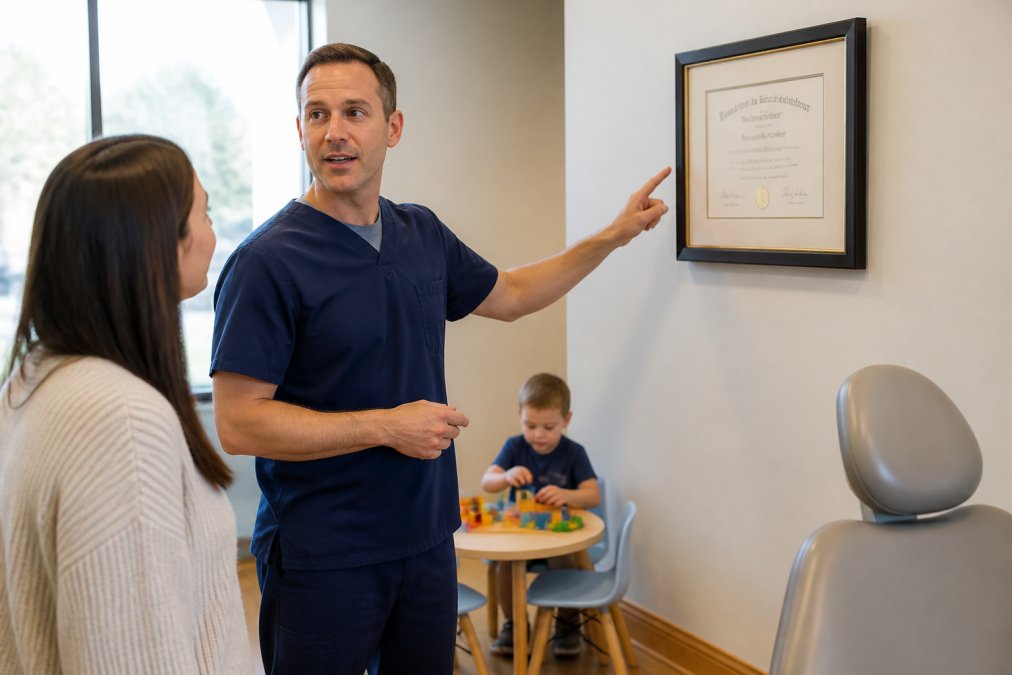
The Difference Between Licensed and Board Certified
Licensing is the legal minimum required to practice dentistry in any state. Every practicing dentist must hold a license, but this only confirms they completed dental school and passed a basic competency exam.
Board certification is a separate, voluntary credential specific to pediatric dentistry. It requires two to three additional years of residency training after dental school, followed by passing the American Board of Pediatric Dentistry’s certification exams.
The practical difference matters. A licensed general dentist can treat children, but a board certified pediatric dentist has completed specialized training in child development, behavior management, and treating patients with special healthcare needs.
The Benefits of a Board Certified Pediatric Dentist
Choosing a board certified pediatric dentist offers advantages that go beyond credentials on a wall. These specialists understand how children’s teeth develop, how to manage anxiety, and when to intervene with orthodontic or surgical care.
For families in Philadelphia, access to this level of expertise means comprehensive care.
Children with autism or sensory processing disorders benefit significantly from a dentist trained in behavior guidance techniques. The same applies to infants with tongue-tie or lip-tie issues, which require precise diagnosis and treatment.
When evaluating any pediatric dental practice, ask specifically whether the treating dentist holds board certification from the American Board of Pediatric Dentistry. Some practices employ board certified dentists but rotate associates who may not hold the same credential.
How to Verify a Pediatric Dentist’s Board Certification
Verification takes about five minutes and eliminates guesswork. The American Board of Pediatric Dentistry maintains a public directory where parents can confirm any dentist’s certification status.
Visit the American Board of Pediatric Dentistry verification portal and search by the dentist’s name or location. The directory shows certification date, current status, and whether the dentist maintains active diplomate standing.
Certification requires ongoing maintenance through continuing education and periodic re-examination. A dentist who let certification lapse will not appear as currently certified.
For additional verification, check the Pennsylvania State Board of Dentistry license lookup to confirm the dentist holds an active state license with no disciplinary actions.
| Verification Step | Where to Check | What to Confirm |
|---|---|---|
| Board certification | ABPD directory | Active diplomate status |
| State license | State board lookup | Active, no disciplinary actions |
| Residency training | Practice website or direct inquiry | Hospital-based program completion |
| Specialty credentials | Professional organizations | Current memberships, additional training |
When Should Baby First Dental Visit Be?
The first dental visit should happen by the child’s first birthday or within six months of the first tooth erupting, whichever comes first. This timeline comes from the American Academy of Pediatric Dentistry recommendations, which emphasizes early prevention over waiting for problems to develop.
Many parents assume baby teeth do not matter because they will fall out anyway. That thinking leads to preventable decay, infection, and in some cases, emergency room visits for conditions that could have been addressed in a routine appointment.
Early visits accomplish several goals. The dentist examines oral development, checks for tongue-tie or lip-tie, demonstrates proper cleaning techniques, and establishes a comfort level with dental care before any problems arise.
A four-month-old may not have visible teeth yet, but a pediatric dentist can still assess gum health, identify potential issues with oral anatomy, and provide guidance on feeding and pacifier use.
Schedule An Appointment Today →
What to Expect at First Pediatric Dental Appointment
The first appointment typically lasts 30 to 45 minutes and focuses on building comfort rather than completing extensive treatment. The dentist will examine the mouth, count teeth, and assess overall oral development.
Parents stay in the room throughout the visit. The dentist explains findings, demonstrates brushing techniques, and answers questions about fluoride, thumb-sucking, and dietary habits that affect oral health.
If the child seems anxious, the dentist may only complete a partial exam and schedule a follow-up to build trust gradually. Forcing a full examination on a frightened toddler creates negative associations that can last years.
Preparing Your Child for the Visit
Preparation starts at home. Read books about dentists, practice opening the mouth in front of a mirror, and avoid using dental visits as threats or punishments.
Schedule appointments during times when the child is typically well-rested and fed. Morning slots often work better than afternoon appointments when fatigue sets in.
For children with autism or sensory sensitivities, call ahead to discuss specific needs. Many pediatric practices offer sensory-friendly approaches such as dimmed lighting, noise-reducing headphones, and extended appointment times.
Never tell a child that a dental visit will not involve any discomfort or that nothing bad will happen. If a procedure requires a small pinch or an unexpected sensation, the child loses trust in both the parent and the dentist. Honest, age-appropriate preparation works better than false promises.
Questions to Ask When Finding a Board Certified Pediatric Dentist in Philadelphia
The right questions separate a practice that simply treats children from one that specializes in pediatric care. Ask these during the first call or visit:
- Is the treating dentist board certified by the American Board of Pediatric Dentistry?
- How does the practice handle children with anxiety or special healthcare needs?
- What emergency care options exist for after-hours dental problems?
- Does the practice offer membership plans for families without dental insurance?
- How are treatment recommendations explained, and what does transparent billing look like?
The last question matters more than most parents realize. A practice committed to transparent communication will walk through treatment options, explain costs before services, and never surprise families with unexpected charges.
For families without dental insurance, membership plans provide predictable costs for routine care.
Frequently Asked Questions
What is the difference between a general dentist and a board certified pediatric dentist?
A general dentist may treat children, but a board certified pediatric dentist completes two to three additional years of specialized training after dental school. This residency focuses entirely on treating infants, children, and adolescents, including those with special healthcare needs. Board certification also requires passing a rigorous exam and maintaining ongoing education. This advanced training means your child receives care from someone who understands growing jaws, behavioral guidance, and early intervention for issues like tongue-tie.
When should my baby have their first dental visit?
The American Academy of Pediatric Dentistry recommends scheduling your baby’s first dental visit by their first birthday or within six months of the first tooth appearing. Early visits help establish a dental home and allow the dentist to check for early signs of decay, tongue-tie, or lip-tie. Many parents wait until their child is older, but early intervention can prevent more serious problems. A board certified pediatric dentist in Philadelphia can guide you on the right timing for your child.
How do I verify if a pediatric dentist is board certified?
You can verify board certification through the American Board of Pediatric Dentistry website, which maintains a directory of certified diplomats. Ask the office directly for the dentist’s certification status and credentials. A board certified pediatric dentist will be happy to share this information. You can also ask about their residency training and whether they participate in continuing education. This simple check helps you avoid providers who claim expertise without formal certification.
What should I look for in a pediatric dental office environment?
Look for a welcoming, child-friendly space with toys, books, and decor that puts kids at ease. The staff should speak directly to your child and explain procedures in simple terms. Ask about sedation options, sensory accommodations, and how they handle anxious children. A good pediatric dental office will also have transparent communication about treatment plans and costs. Visit the office before scheduling a procedure if you have concerns about the environment.
Does my child need a pediatric dentist or can they see a family dentist?
Both can provide care, but a board certified pediatric dentist has specialized training in child development, behavior management, and treating special needs. For children with anxiety, autism, or complex dental needs, a pediatric specialist is often better equipped. Family dentists may be suitable for low-risk children, but pediatric dentists focus entirely on young patients. Consider your child’s comfort level and any special healthcare needs when deciding.
What if my child has autism and gets overwhelmed at the dentist?
Many board certified pediatric dentists have experience with sensory processing disorders and autism. They may offer quiet rooms, weighted blankets, visual schedules, or gradual desensitization visits. Ask about their approach to sensory needs before scheduling. A good provider will work with you to create a customized plan, such as a pre-visit tour or shorter appointments. Do not settle for a practice that dismisses your concerns. Finding the right pediatric dentist in Philadelphia can make dental care manageable for your child.
Can I get a same-day appointment for a dental emergency?
Many pediatric dental offices reserve time for urgent care, but same-day availability varies. When calling to schedule, ask specifically about their emergency policy and typical wait times. If your child has a toothache, swelling, or a knocked-out tooth, call immediately. Some practices offer after-hours guidance. If you cannot reach your regular dentist, urgent care centers or hospital emergency rooms can provide temporary relief, but follow up with a pediatric dentist for definitive treatment.


