
Quick Summary
A toddler oral hygiene routine is a daily habit of brushing, cleaning and checking a young child’s teeth and gums. Brush twice a day with a small, soft-bristled brush and a rice-grain or pea-sized smear of fluoride toothpaste, and have a dentist see your child by age one.
- Brush your toddler’s teeth twice a day, morning and bedtime, for about two minutes.
- Use a rice-grain smear of fluoride toothpaste under age three, and a pea-sized amount ages three to six.
- Wipe gums with a clean, damp washcloth before teeth appear.
- Replace the toothbrush every three months, or sooner after illness or visible wear.
- Schedule a first dental visit by age one, or within six months of the first tooth.
Table of Contents
- Why a Toddler Oral Hygiene Routine Matters Now
- Step 1: Choose a Soft-Bristled Toothbrush for Your Toddler
- Step 2: Use the Right Amount of Fluoride Toothpaste
- Step 3: Set Brushing Times and a Consistent Daily Schedule
- Step 4: Learn How to Brush a Toddler’s Teeth Step by Step
- Step 5: Get Your Toddler to Brush Their Teeth Without a Fight
- Common Mistakes and What to Do When Brushing Is Missed
- Scheduling Your Child’s First Dental Visit and Next Steps
- Frequently Asked Questions
Why a Toddler Oral Hygiene Routine Matters Now
A toddler oral hygiene routine is a daily habit of brushing, cleaning and checking a young child’s teeth and gums, and it matters because baby teeth set the stage for lifelong dental health.
Many parents assume baby teeth do not matter because they fall out. Children see a dentist by age one, or within six months of the first tooth appearing (AAPD).
Healthy habits are easier to build early than to fix later.
Watch out: Sugary drinks and frequent snacking can cause tooth decay even when brushing happens. Limit juice and sweetened drinks, and offer water between meals.
Here is what a strong routine usually includes:
- Wiping gums with a clean, damp washcloth before teeth appear
- Brushing teeth twice a day with a small, soft-bristled brush
- Using a rice-grain or pea-sized smear of fluoride toothpaste
- Parent supervision and help until the child can brush well alone
- A regular dental visit with a pediatric dentist
For a broader look at early childhood dental care, read Pediatric Dental Health Tips for Toddlers.
The American Academy of Pediatric Dentistry, through AAPD guidance on infant and toddler oral health, provides dentist-backed recommendations on when first visits should happen and what daily care should look like.
Toddlers need to see a dentist early as well. Toddlers explains why the AAPD recommends a first visit by age one, and why early visits can catch problems before they become painful.
Step 1: Choose a Soft-Bristled Toothbrush for Your Toddler
A soft-bristled toothbrush made for toddlers is the right choice because it cleans effectively without hurting sensitive gums. But the details matter more than most parents expect.
Head size and bristle softness. Look for a brush head small enough to fit comfortably inside a toddler’s mouth, roughly the size of a thumbnail.
Handle design. A thick, easy-to-grip handle helps little hands hold the brush, but during the toddler years you will be doing most of the brushing. Choose a handle that is comfortable for you to maneuver and that has a non-slip grip.
Manual vs. powered. A manual brush used correctly works well for most toddlers. Battery-powered brushes can be helpful for children who resist brushing or need extra plaque removal, but they are not required.
Replacement and hygiene. Replace the brush every three months, or sooner if bristles are frayed or after an illness. Toddlers often chew on their brushes, so inspect the head regularly for damage. Never share a toothbrush, and rinse it thoroughly after each use.
Here is a quick guide to choosing a brush:
- Head size: Small enough to reach the back teeth without gagging
- Bristles: Soft, rounded tips
- Handle: Thick, easy to grip, and comfortable for an adult to maneuver
- Replacement: Every three months, or after illness or visible wear
Let your toddler pick between two acceptable brushes, this small choice builds cooperation without compromising safety.
Watch out: Many toddlers chew on their brushes. Pick a brush with a rounded, sturdy design and check it often for damage.
Here is a quick summary of the key points for choosing a toddler toothbrush.
| Feature | What to look for | Why it matters |
|---|---|---|
| Head size | Small, about thumbnail-sized | Reaches back molars without gagging |
| Bristles | Soft, rounded tips | Cleans well without irritating gums |
| Handle | Thick, non-slip grip | Easy for parent to maneuver |
| Replacement | Every three months | Keeps bristles effective and clean |
Step 2: Use the Right Amount of Fluoride Toothpaste
Fluoride toothpaste helps prevent cavities, and toddlers need the right amount. For children under age three, use a rice-grain-sized smear of fluoride toothpaste, about the size of a grain of rice.
Why the amount matters. Parents often worry about swallowing toothpaste. Small amounts are normal, but too much fluoride over time can cause white or brown spots on developing teeth, a condition called dental fluorosis.
Minimizing swallowing. Teach your child to spit after brushing, and help them do it. For toddlers who cannot spit reliably, gently wipe away excess toothpaste with a soft cloth or let them drool it out.
Choosing a toothpaste. Use a toothpaste that contains fluoride and is labeled for children. Many children’s toothpastes come in mild flavors like bubblegum or fruit, which can help with acceptance.
A quick reference:
- Under age 3: A rice-grain smear
- Ages 3 to 6: A pea-sized amount
- After brushing: Spit, but do not rinse
Do not let your toddler eat toothpaste from the tube. Store it out of reach and supervise use.
For specific questions about toothpaste, see How Much Toothpaste for a Toddler.
Step 3: Set Brushing Times and a Consistent Daily Schedule
Brushing twice a day, once in the morning and once before bed, gives a toddler a steady rhythm. Consistency matters more than perfection.
Pick two anchor times that fit your family’s schedule. Many families brush after breakfast and right before bed. Bedtime brushing is especially important because saliva flow drops during sleep, which lets bacteria work longer on the teeth.
Schedule An Appointment Today →
Attach brushing to something the toddler already does. For example, brush right after washing hands, or right before putting on pajamas. Use a short song or a timer to help the child know how long to brush.
Plan for these habits:
- Brush twice daily, morning and bedtime
- Keep brushing time to about two minutes
- Use the same spot each time, such as the bathroom sink
- Remove sugary snacks and drinks right before bed
Watch out: Letting a toddler sip milk or juice in bed can cause decay, especially on the front teeth. Offer water instead.
Step 4: Learn How to Brush a Toddler’s Teeth Step by Step
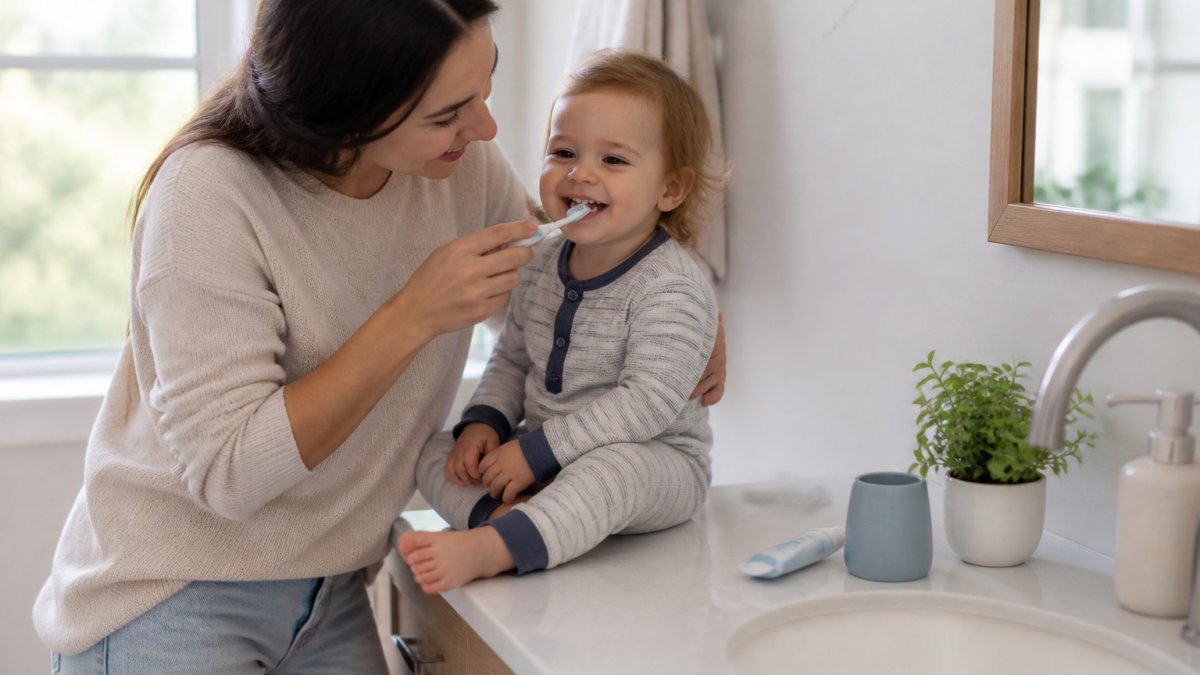
Parents usually brush their toddler’s teeth, even after the child starts trying on their own. For practical strategies when a child resists brushing, see how to clean toddler teeth who hates brushing. Lie the child down or have them sit on your lap, and gently tilt the head back so you can see the teeth and gums clearly.
Use small, gentle circles on each tooth, and cover the outer surfaces, inner surfaces and chewing surfaces. Do not forget the back molars, where food gets trapped. Brush the tongue lightly too, since it can hold bacteria.
A simple step-by-step method:
- Get the toddler in position, lying back or on your lap
- Place the brush at the gumline at a slight angle
- Brush the outer surfaces in small circles
- Brush the inner surfaces, including the back teeth
- Brush the chewing surfaces and the tongue
- Let the child spit, and wipe away extra toothpaste
Before teeth appear, wipe the gums with a clean, damp washcloth after feeding. This builds the habit early and keeps bacteria down.
Step 5: Get Your Toddler to Brush Their Teeth Without a Fight
Many toddlers resist brushing, and that is normal. Kids this age want control, and brushing can feel like an intrusion. The goal is to make brushing predictable and calm, not to win every argument.
Give small choices when you can. Let the child pick between two toothbrushes or two flavors of training toothpaste. Use a sticker chart, a favorite song or a brushing character to build interest. Praise effort, not just results.
Some toddlers have sensory sensitivities that make brushing hard. They may dislike the texture of toothpaste or the feeling of the brush on their gums. Try a different toothpaste flavor, a softer brush, or a warm washcloth first. Go slowly and stop before the child gets upset.
Practical tips:
- Offer two simple choices, such as “red brush or blue brush?”
- Use songs or a two-minute timer
- Let the child hold the brush while you brush their teeth
- Model brushing yourself so the child can copy you
- Keep a calm tone, even when the toddler protests
Watch out: Forcing brushing during a tantrum often makes resistance worse. Try again later.
Common Mistakes and What to Do When Brushing Is Missed
A common mistake is brushing too briefly or only once a day. Another is skipping the back teeth, where decay often starts. Parents also sometimes let toddlers brush alone too early and assume the job is done.
Missed brushing happens to every family. If the morning brushing is skipped, brush at bedtime and try to be consistent the next day. Do not try to make up for it with extra brushing right away. Just get back to the routine.
If a toddler refuses to brush for several days, stay calm and keep offering the brush. Try a different time, a different brush, or let the child brush a stuffed animal first. If you see white spots, brown spots, pain, or swelling, contact a dentist promptly.
Helpful reminders:
- Brush at the same two times each day
- Keep a backup brush in the car or diaper bag
- Share the routine across caregivers, such as grandparents or daycare staff, so everyone uses the same method
- Keep the same toothpaste and brush for consistency
Scheduling Your Child’s First Dental Visit and Next Steps
Once a daily routine is in place, schedule a first dental visit. The AAPD recommends a visit by age one, and a pediatric dentist can check growth, look for early decay, and answer questions about feeding, pacifier use and teething.
Regular checkups matter after that. Exams and Cleanings explains what to expect at these routine visits.
Ready to book? Schedule An Appointment with Pediatric Dental Excellence to set up your child’s first visit or next checkup.
Next steps for parents:
- Start brushing twice a day with a soft brush and fluoride toothpaste
- Limit sugary drinks and snacks between meals
- Book a first dental visit by age one
- Keep up with routine checkups every six months
A toddler oral hygiene routine works best when it is simple, steady and shared. Start small, stay consistent, and bring your child to the dentist early.
Frequently Asked Questions
How often should I brush my toddler’s teeth?
Brush your toddler’s teeth at least twice a day, once in the morning and once before bed. Brushing before bed matters most because saliva flow drops overnight, which gives bacteria more time to act on sugars left on the teeth. Make the bedtime session the one you never skip, and keep the routine predictable so your toddler knows what comes next. If you can add a third brushing after a snack, that helps, but twice daily is the baseline recommendation.
How much toothpaste should I use for my toddler?
For toddlers who have started using fluoride toothpaste, use a smear or a rice-sized amount for children under three and a pea-sized amount for children aged three to six. Use only the amount needed, and supervise so your child spits rather than swallows. Fluoride toothpaste is the recommendation for most toddlers, but check with your child’s dentist about the right approach for your child, especially if they have higher cavity risk.
When should my toddler first see a dentist?
Most families should schedule the first dental visit by the child’s first birthday, or within six months after the first tooth appears. An early visit lets the dentist check development, review your home care, and answer questions about feeding, pacifier use and thumb-sucking. Early visits also help your child get comfortable in the dental office. Ask your child’s pediatrician or a pediatric dentist for guidance on timing for your child.
What if my toddler resists brushing?
Resistance is common, and it usually eases with a consistent routine, a short and calm approach, and a little choice in the process. Let your toddler hold the brush after you have finished, sing a song for the two minutes, or brush together in front of a mirror so they can copy you. If sensory sensitivities make brushing hard, try a softer brush, a different toothpaste flavor, or brushing at a calmer time of day. If you are concerned about how brushing is going, talk with your child’s dentist for personalized suggestions.


