Table of Contents
- Why Pediatric Dental Health Matters for Toddlers
- How to Brush a Toddler’s Teeth: Step-by-Step
- Toddler Cavity Prevention: Nutrition and Daily Habits
- Flossing and Cleaning Between Teeth
- First Dental Visit for Toddlers: What to Expect
- What to Expect at a Toddler Dental Checkup
- Building a Daily Oral-Care Routine for Toddlers
- Frequently Asked Questions
Last Updated: October 11, 2026
Why Pediatric Dental Health Matters for Toddlers
Establishing strong oral habits early sets the foundation for a lifetime of healthy teeth. Many parents assume baby teeth don’t need attention since they’ll fall out eventually, but primary teeth guide the eruption of permanent teeth and affect how a child chews, speaks, and develops confidence.
Starting early prevents cavities, tooth decay, and painful procedures while supporting proper jaw development and speech formation during critical growth years.
Toddlers who establish good oral hygiene habits before age three are significantly more likely to maintain healthy teeth throughout childhood and into adulthood. The goal isn’t perfection, it’s building routines that stick.
Baby teeth matter just as much as permanent teeth. They affect chewing, speech, jaw development, and set the stage for lifelong oral health habits.
How to Brush a Toddler’s Teeth: Step-by-Step
Brushing a toddler’s teeth requires patience, the right tools, and realistic expectations. Most toddlers resist at first, but making it part of the daily routine without turning it into a battle is key.
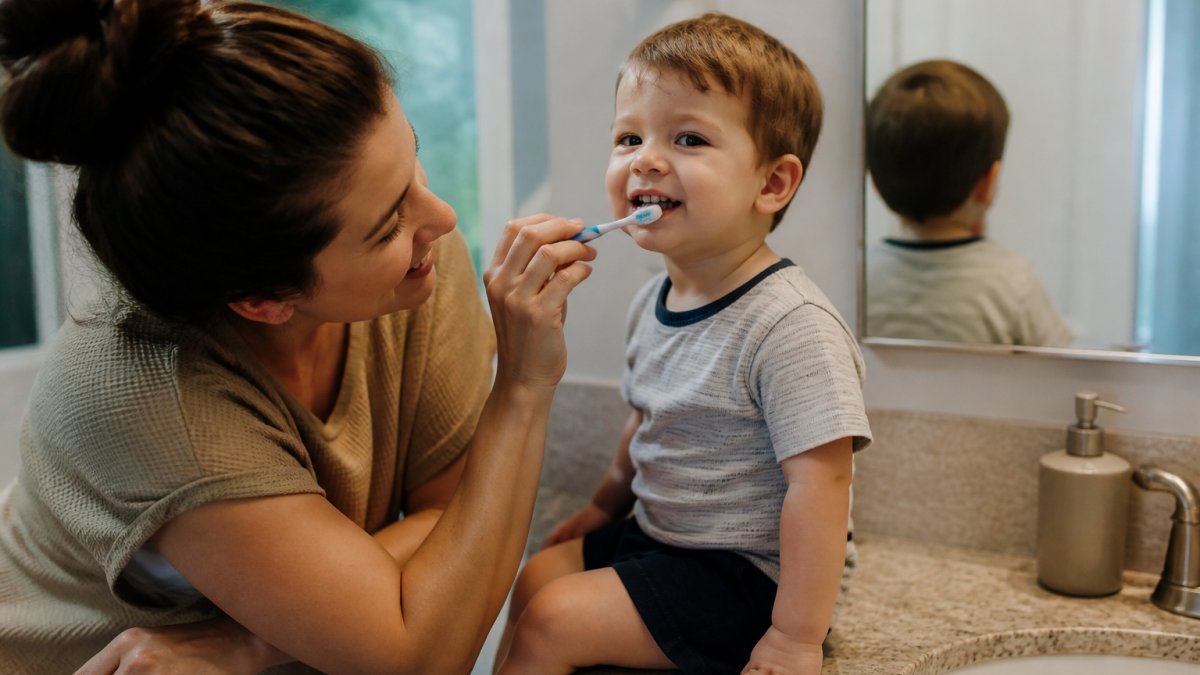
Here’s the step-by-step approach:
-
Choose the right toothbrush. Use a soft-bristled brush designed for toddlers with a small head that fits comfortably in their mouth.
-
Position your toddler safely, Sit them on your lap, a bathroom counter, or in a special toddler chair where you can see their mouth clearly and maintain control.
-
Apply the correct toothpaste amount, This is critical and often done wrong.
-
Angle the brush at 45 degrees toward the gum line, not straight into the teeth.
-
Use gentle circular motions on outer surfaces, then inner surfaces, then chewing surfaces.
-
Brush all four quadrants (upper right, upper left, lower right, lower left), spending about 10-15 seconds on each.
-
Keep it quick, The entire process should take about two minutes total.
-
Rinse gently, Let your toddler rinse with a small amount of water. Don’t worry if they swallow some toothpaste at this age.
Toothpaste Amount and Fluoride Guidance
The amount of toothpaste matters more than parents realize. Too much fluoride can cause fluorosis, a cosmetic condition that affects tooth enamel. Too little won’t provide cavity protection.
For children under age three: Use a smear of toothpaste, roughly the size of a grain of rice. This tiny amount is enough to clean teeth and minimize fluoride ingestion if swallowed.
For children ages three to six: Use a pea-sized amount. Still small, but enough to be effective as pediatric dental health tips for toddlers progress.
Always use fluoride toothpaste designed for children. The American Academy of Pediatric Dentistry recommends it starting at tooth eruption to strengthen enamel and prevent cavities.
Swallowing too much fluoride during the critical tooth development years (birth to age eight) can cause dental fluorosis (the CDC). This is why the amount matters. Use the rice-grain or pea-sized guideline strictly.
Brushing Frequency and Duration
Brush toddler teeth twice daily, morning and bedtime. Bedtime brushing is especially important because saliva flow decreases at night, leaving teeth more vulnerable to decay.
Each session should last about two minutes, which is enough time to clean all surfaces with the right technique.
Consistency matters more than perfection. Build brushing into your routine just like meals and naps.
What to Do When Your Toddler Resists Brushing
Resistance is universal. Here’s what actually works:
Make it part of the routine. Brush at the same time daily; predictability reduces resistance.
Let them pick the toothbrush. Offering a choice between two options increases cooperation.
Sing or count. Sing a two-minute song or count to 120 while brushing to make it feel less threatening.
Brush together. Let your toddler watch you brush your own teeth first to normalize the behavior.
Use positive language, Say “We’re cleaning your teeth” rather than “I’m going to brush your teeth.” Avoid words like “shot,” “pain,” or “hurt.”
Don’t force it, If your toddler is extremely resistant, take a break and try again later. Forcing creates negative associations with dental care.
Praise effort, not perfection, Celebrate that they let you brush, not how well it went.
Toddler Cavity Prevention: Nutrition and Daily Habits
What toddlers eat and drink directly affects their teeth. Cavity prevention starts at the dinner table, not just at the bathroom sink.
Limiting Sugary Snacks and Drinks
Sugar feeds cavity-causing bacteria, which produce acid that attacks tooth enamel for 20-30 minutes after consumption.
Common hidden sugar sources:
- Juice and juice boxes (even 100% fruit juice)
- Yogurt and flavored yogurt tubes
- Dried fruit and fruit leather
- Granola bars and cereal bars
- Flavored milk
- Smoothies
- Applesauce pouches
- Crackers and pretzels (many contain added sugar)
Frequency of sugar exposure matters more than amount. A toddler who sips juice throughout the day experiences more acid attacks than one who drinks it with a meal.
Practical limits:
Schedule An Appointment Today →
- Offer sugary snacks only with meals, not between meals
- Limit juice to mealtimes only (ideally diluted with water)
- Choose water or plain milk as the default drink
- Read labels, many “healthy” toddler foods contain surprising amounts of sugar
Encouraging Water and Nutritious Meals
Water is the best drink for toddlers between meals. Offer it frequently, especially after meals and snacks.
Nutritious meals support oral health. Calcium-rich foods (milk, cheese, yogurt) strengthen teeth, while crunchy fruits and vegetables naturally clean teeth as toddlers chew.
Tooth-friendly meal ideas:
- Cheese and whole grain crackers
- Milk and berries
- Yogurt with granola (check sugar content)
- Steamed broccoli or carrots
- Apple slices with nut butter
- Whole grain toast with cheese
Avoid sticky foods that cling to teeth, like raisins, dried fruit, and caramel. If your toddler eats these, brush teeth afterward or at least rinse with water.
Offer water in a sippy cup or open cup throughout the day. Make it the default beverage between meals. This single habit prevents more cavities than almost anything else parents can do.
Flossing and Cleaning Between Teeth
Toddlers can have cavities between their teeth where a toothbrush can’t reach. Flossing removes food particles and plaque from these tight spaces; many parents skip this step thinking toddlers are too young.
Start flossing when two teeth touch each other, typically between ages two and three.
Flossing a toddler’s teeth:
- Use about 18 inches of floss or a floss pick designed for children
- Gently guide the floss between teeth with a sawing motion
- Curve the floss around each tooth in a C-shape
- Move the floss up and down along the side of each tooth
- Don’t snap the floss down hard, this hurts the gums
Floss once daily, ideally before bed. The goal is removing debris and bacteria from between teeth.
If traditional floss is difficult, try:
- Floss picks (easier to hold)
- Water flossers designed for kids
- Interdental brushes (tiny brushes that fit between teeth)
Many toddlers resist flossing more than brushing. Keep it quick and matter-of-fact. Resistance usually decreases with consistency.
First Dental Visit for Toddlers: What to Expect
The first dental visit sets the tone for a toddler’s relationship with dental care. Preparation reduces fear significantly.
When to Schedule the First Appointment
The American Academy of Pediatric Dentistry recommends scheduling a toddler’s first dental visit by age one or within six months of the first tooth erupting, whichever comes first.
Early visits screen for cavities or developmental issues, establish a baseline for oral health, assess fluoride needs, provide parental guidance, and build familiarity with the dental environment. They’re typically just an examination and cleaning, with no procedures.
Preparing Your Toddler for Success
Preparation is everything. A toddler who knows what will happen experiences less anxiety than one who walks in blind.
Before the appointment: Read age-appropriate books, use simple language (“The dentist will count your teeth and make sure they’re healthy”), avoid scary words like “shot” or “drill,” role-play at home, and stay calm yourself.
During the appointment:
- Stay in the room for the first visit
- Let your toddler sit in your lap if needed
- Praise your toddler for cooperating
- Don’t make promises you can’t keep (“It won’t hurt”)
After the appointment:
- Praise effort and bravery
- Keep the tone positive
- Schedule the next appointment before leaving
What to Expect at a Toddler Dental Checkup
Cleaning: A gentle cleaning removes plaque and tartar buildup with a light polish using a soft brush and mild paste.
X-rays: X-rays may be taken to check for cavities between teeth or below the gum line. Many offices skip them for the first visit unless there’s a specific concern.
Fluoride treatment (if recommended): If cavity risk is high, the dentist may apply fluoride varnish to strengthen enamel in a quick, fruity-tasting application.
Early Signs of Cavities and Tooth Decay
Early detection prevents progression and the need for more invasive treatment.
Warning signs:
- White or brown spots on teeth (especially near the gum line)
- Dark discoloration or pitting
- Sensitivity to hot or cold foods
- Swelling or pus around a tooth
- Toddler complaining of tooth pain
- Reluctance to chew on one side of the mouth
- Bad breath
Cavities in baby teeth can spread quickly. If you notice any of these signs, contact a pediatric dentist immediately. Many cavities are reversible if caught early.
Professional Cleaning and Preventive Care
Professional cleanings remove tartar that brushing alone can’t eliminate. Preventive care includes fluoride varnish applications, dental sealants on molars, dietary counseling, and brushing and flossing instruction. Regular checkups every six months catch problems early and keep teeth healthy.
Toddlers ages one to three who need a comprehensive evaluation, parents seeking guidance on establishing oral care routines, and families wanting to prevent cavities before they start.
Building a Daily Oral-Care Routine for Toddlers
Consistency is the secret to success. A routine that becomes automatic is easier to maintain.
| Daily Task | Timing | Duration | Frequency |
|---|---|---|---|
| Brush teeth | Morning and bedtime | 2 minutes | Twice daily |
| Floss | Evening (before bed) | 2-3 minutes | Once daily |
| Rinse with water | After meals and snacks | 30 seconds | As needed |
| Offer water | Between meals | Throughout day | Multiple times |
| Limit sugary foods | Mealtimes only | N/A | Consistent |
Sample daily routine: Morning, brush teeth and rinse. Throughout day, offer water between meals, save sugary snacks for mealtimes, offer crunchy fruits or vegetables. Evening, brush teeth, floss, rinse.
The routine doesn’t have to be perfect. What matters is that it happens regularly. Most toddlers adjust within two to three weeks when a routine is consistent.
Early pediatric dental health tips for toddlers prevent cavities, support healthy development, and build positive associations with dental care. Schedule your toddler’s first appointment and discover how preventive care makes a real difference in your child’s smile.
Frequently Asked Questions
How much toothpaste should I use for my toddler?
For children under 3, use a grain-of-rice-sized amount of fluoride toothpaste. For toddlers ages 3 to 6, use a pea-sized amount. Fluoride helps strengthen tooth enamel and prevent cavities, but too much can be harmful if swallowed regularly. Always supervise brushing and teach your toddler to spit out toothpaste rather than swallow it.
When should my toddler have their first dental visit?
Schedule your toddler’s first dental visit by age 1 or within six months of their first tooth erupting, whichever comes first. Early visits establish healthy habits, allow the dentist to check for developmental issues like tongue-tie, and help your child become comfortable in a dental environment. Starting early makes future visits easier and catches problems before they become serious.
What should I do if my toddler refuses to let me brush their teeth?
Try making brushing fun: use a colorful toothbrush, sing a song, or let your child pick a favorite flavor of toothpaste. Brush your teeth together so they see it as normal. Keep sessions short (around two minutes) and stay calm if they resist. If sensory sensitivities are an issue, start by letting them touch the brush or toothpaste without it going in their mouth. Consistency and patience help most toddlers accept brushing over time.
How often should my toddler see a dentist?
Most toddlers should visit the dentist every six months for routine checkups and professional cleaning. More frequent visits may be recommended if your child has early signs of cavities, special healthcare needs, or if the dentist identifies risk factors. Regular checkups help catch tooth decay early and keep your toddler’s primary teeth healthy, which supports proper development of permanent teeth.


